
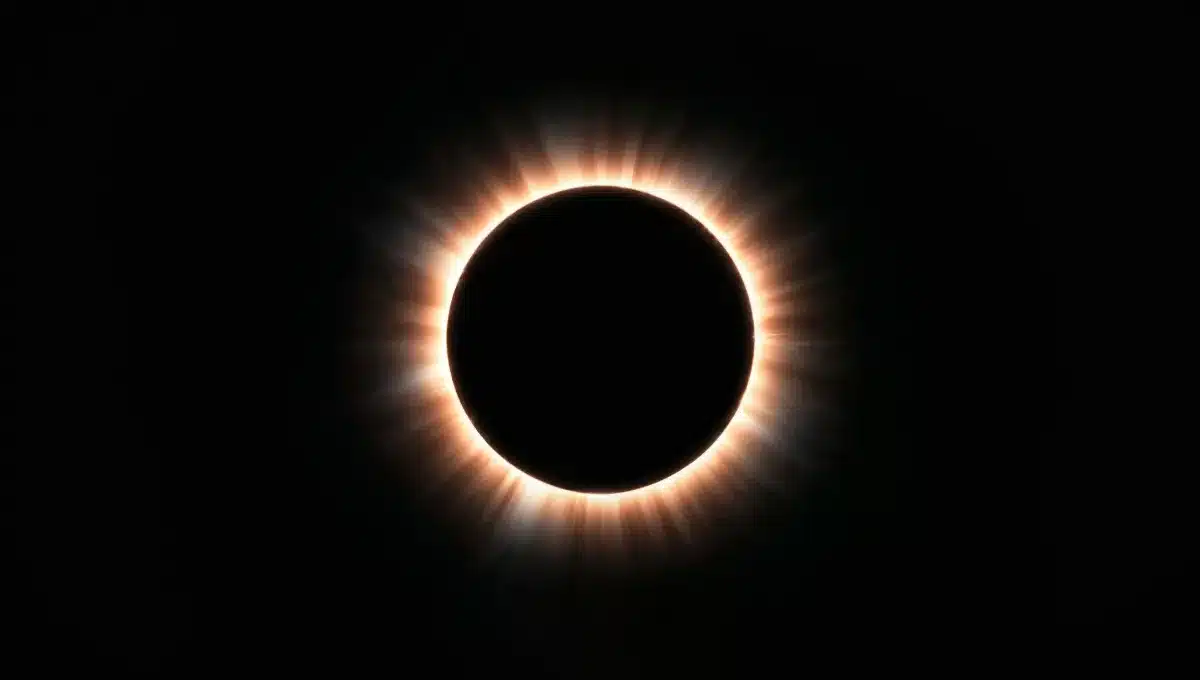
US NEWS: On August 2, 2027, one of the longest and most accessible total solar eclipses in modern history will sweep across southern Europe, North Africa, and the Middle East, giving millions of people the chance to watch the sun vanish for more than six minutes in the middle of the day.
Astronomers and NASA confirm that the period of totality will reach a maximum of six minutes and 23 seconds. That duration places this eclipse among the longest possible on Earth, where the theoretical upper limit stands at seven minutes and 32 seconds. Events that come anywhere close to that mark happen only a handful of times per century.
The last total eclipse with a similar length took place on July 11, 1991, when the moon’s shadow crossed Hawaii, Mexico, and parts of Central and South America for up to six minutes and 53 seconds. The next one expected to match or exceed this length will not arrive until 2114.
What makes the 2027 eclipse truly special is location. Many long-duration eclipses occur almost entirely over open ocean or uninhabited land. The 2009 record holder, for example, peaked over the Pacific with virtually no one on the ground to see it. In sharp contrast, the 2027 path of totality will travel directly over major population centers and world-famous landmarks.
The narrow corridor of complete darkness will begin in the Atlantic, cross southern Spain and Gibraltar, move through Morocco, Algeria, Tunisia, Libya, Egypt, Sudan, Saudi Arabia, Yemen, and Somalia, and then head out over the Indian Ocean. One of the most popular viewing sites is expected to be Luxor, Egypt, where visitors can experience nearly the full six minutes and 23 seconds of darkness surrounded by ancient temples and the Valley of the Kings.
The extended totality is possible because the eclipse occurs just hours before the moon reaches perigee, its closest point to Earth in its orbit. A slightly larger apparent size allows the moon to cover the sun for a longer stretch of time.
Cities and regions along the path include Málaga and Cádiz in Spain, Tangier and Marrakech in Morocco, Tunis in Tunisia, Tripoli in Libya, Cairo and Luxor in Egypt, and Mecca and Medina in Saudi Arabia. Travelers from Australia, the United States, and elsewhere have already begun reserving hotels and tours years in advance.
While the total eclipse will not be visible from Australia or North America, several major total eclipses are scheduled for the coming decade and a half, including events in 2028 and 2037 that will cross Australia and New Zealand, and a lengthy one across the United States in 2045.
For now, the summer of 2027 stands out as the must-see celestial event of the century for anyone able to reach the path. Clear weather, proper eye protection, and a spot within the narrow band of totality will be essential to witness one of nature’s most dramatic spectacles.