
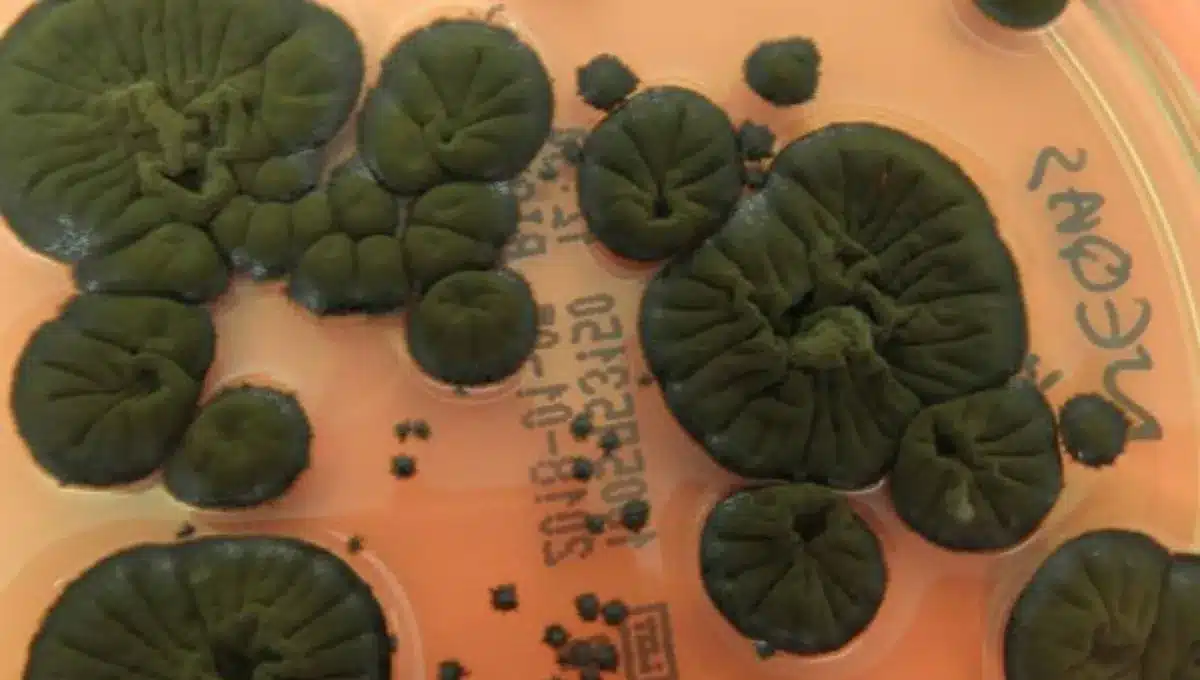
CHERNOBYL EXCLUSION ZONE (US News): Almost 39 years after the world’s worst nuclear disaster, a mysterious black fungus continues to flourish inside some of the most radioactive structures on Earth, reigniting debate over whether it has evolved a way to “feed” on radiation itself.
Cladosporium sphaerospermum, a melanin-rich fungus first documented coating the walls of Chernobyl’s ruined Reactor No. 4 shelter in the late 1990s, grows faster when exposed to intense gamma radiation, according to multiple peer-reviewed studies. The organism’s dark pigment appears to play a key role, absorbing radiation and triggering changes that enhance growth and protect cells from damage.

Research led by Ekaterina Dadachova and Arturo Casadevall at Albert Einstein College of Medicine in New York first highlighted the phenomenon in 2007 and 2008 papers. Their experiments showed that fungal samples exposed to radiation levels hundreds of times above background not only survived but increased biomass and altered melanin’s electronic properties.
The findings sparked widespread speculation that the fungus might perform radiosynthesis, using radiation the way plants use sunlight for photosynthesis. NASA and private space companies have since explored the organism as a potential biological radiation shield for long-duration missions.
A 2020 experiment on the International Space Station appeared to support the shielding idea. A thin layer of C. sphaerospermum reduced cosmic radiation reaching sensors by roughly 2% to 5% compared with empty control plates.
Yet a growing number of experts caution that evidence for true radiosynthesis is still lacking. No published study has demonstrated that the fungus fixes carbon or produces usable chemical energy directly from ionizing radiation.
“Growth enhancement under radiation is real, but calling it radiosynthesis goes beyond the data we have right now,” said Nils Averesch, a Stanford University researcher who studies extreme-environment microbes. “We haven’t seen radiation-driven carbon fixation or a clear metabolic pathway that converts gamma rays into ATP.”
Other melanized fungi show varied responses. Wangiella dermatitidis, a black yeast, also accelerates growth under radiation, while Cladosporium cladosporioides increases melanin production without the same growth boost. The differences suggest C. sphaerospermum’s reaction may be a sophisticated defense mechanism rather than a new form of energy harvesting.

Ukrainian scientists who first discovered the Chernobyl fungi in 1990s expeditions led by microbiologist Nelli Zhdanova noted that black-pigmented species dominated the most contaminated sites, hinting that melanin confers a survival edge in high-radiation environments long before the radiosynthesis hypothesis emerged.
As cleanup crews prepare to install a new protective dome over the aging sarcophagus and radiation levels slowly decline, researchers worry that the unique conditions that fostered these adaptations may soon disappear.
For now, the velvet-black fungus clinging to Chernobyl’s concrete walls remains one of nature’s most intriguing survivors, proof that life can adapt to even the harshest human-made disasters, even if the full story of how it does so is still being written.