Skip to content
Signature Media Group
  • News
  • Sports
  • Entertainment
  • Automobile
  • Technology
  • Business
  • News
  • Sports
  • Entertainment
  • Automobile
  • Technology
  • Business

Lowell Langosh

Lowell Langosh is a Senior News Writer at BS News, specializing in trending stories, technology updates, automobile news, sports coverage, and career-related reporting. With several years of experience in digital journalism, Lowell focuses on delivering accurate, timely and reader-friendly content.

Silicon Sovereignty: The Global Push for Domestic Chip Manufacturing

April 27, 2026 | 12:45 am by Lowell Langosh
AR Glasses vs. Smartphones: The Battle for the Next Primary Screen

The globalization of the semiconductor industry has hit a … Read more

Categories Technology

The Humanoid Race: Why 2026 is the Year of the General-Purpose Robot

April 27, 2026 | 12:41 am by Lowell Langosh
"Act as a senior technology journalist and SEO specialist with 15 years of experience. Write a comprehensive, 800-word article titled: '[Insert Heading Here]'. Core Requirements: Tone: Authoritative, forward-thinking, yet accessible (similar to Wired or The Verge). Structure: * Introduction: Hook the reader with a current industry pain point or a 'state of the world' summary. Define the topic and why it matters now. The 'Why' (H2): Explain the technological or economic shift driving this trend. Technical Breakdown (H2): Explain how the tech works without being overly academic. Use a bulleted list for key components. Real-World Impact (H2): Provide specific (hypothetical or real) use cases for businesses or consumers. Challenges & Ethics (H2): Address the 'bottlenecks' (e.g., privacy, cost, or energy consumption). Conclusion: Summarize the long-term outlook for the next 3–5 years. SEO & Quality Guidelines: LSI Keywords: Naturally integrate related terms such as 'scalability,' 'integration,' 'ROI,' 'ecosystem,' and 'infrastructure.' Formatting: Use short paragraphs (2–3 sentences), bold key terms for scannability, and use a professional table if comparing 'Old Tech' vs. 'New Tech.' Depth over Breadth: Avoid repetitive 'intro/outro' sentences in every paragraph. Dive deep into the implications of the technology. No Hallucinations: If citing data, use general industry benchmarks (e.g., 'Recent Gartner trends suggest...') rather than inventing specific fake statistics. Constraint: Avoid generic AI phrases like 'In the rapidly evolving landscape' or 'In conclusion, it is clear that.' Start with a direct, punchy observation."

The specialized robot is officially a dead end. For … Read more

Categories Technology

Physical AI: Bringing Large Language Models into the Real World

April 27, 2026 | 12:39 am by Lowell Langosh
The specialized robot is officially a dead end. For decades, the pinnacle of automation was a $100,000 robotic arm bolted to a factory floor, capable of performing exactly one task—welding, painting, or sorting—with repetitive, mindless precision. But the moment the task changed, or the part moved an inch out of alignment, the "smart" machine became a giant paperweight. This rigidity has left millions of hours of human labor untouched by technology, simply because our world was built for people, not for stationary machines.We are now crossing the rubicon into the era of the General-Purpose Robot (GPR). In 2026, the focus has shifted from teaching robots to do one thing to giving them the physical and cognitive flexibility to do anything. Led by the rapid evolution of bipedal humanoids, we are finally building machines that fit our world, rather than forcing our world to fit the machine.The "Why": The Economic Necessity of HumanoidsThe primary driver for the humanoid race isn't just cool engineering; it is a demographic time bomb. Global labor shortages in manufacturing, logistics, and elder care are no longer theoretical. Recent industry benchmarks suggest that by 2030, the global talent shortage could reach 85 million people, resulting in roughly $8.5 trillion in unrealized annual revenues.Technologically, we have reached the "Hardware-Software Convergence." In the past, hardware was the bottleneck—motors were too heavy, and batteries died in twenty minutes. Today, high-torque actuators and high-density LFP (Lithium Iron Phosphate) batteries have matured. When you combine this capable hardware with "Foundation Models" for robotics, you get a machine that can learn by watching a human, drastically shortening the path to ROI. We aren't just buying a tool; we are hiring an adaptable infrastructure.Technical Breakdown: The Architecture of AgencyModern humanoids operate on a "Neural-Physical" loop that allows them to navigate unstructured environments. Unlike the "pre-programmed" bots of the past, 2026’s humanoids rely on a multi-layered ecosystem of intelligence.Proprioceptive Feedback: High-speed sensors in every joint allow the robot to feel its own weight and balance, enabling it to walk on uneven red brick construction sites or climb stairs.Vision-Language-Action (VLA) Models: These models allow the robot to understand natural language commands (e.g., "Move those crates to the Suzuki scooter") and translate them into physical movements.End-to-End Neural Networks: Instead of manual coding, robots now learn via "imitation learning." If a human performs a task while wearing a VR suit, the robot’s neural net learns the movement patterns directly.Edge Compute Infrastructure: To maintain balance and avoid collisions, humanoids process massive amounts of spatial data locally on specialized AI chips, ensuring near-zero latency.The Robotics Paradigm ShiftFeatureIndustrial Arms (Old Tech)General-Purpose Humanoids (New Tech)Form FactorStationary / BoltedMobile / BipedalLearning PathRigorous Manual CodingImitation & Observational LearningEnvironmentCaged / ControlledOpen / Collaborative with HumansVersatilitySingle-Task (Specialized)Multi-Task (Generalist)Real-World Impact: From Fulfillment to the Front DoorThe integration of humanoids is starting in the "Middle Mile"—the warehouses and fulfillment centers where the labor gap is most acute. Companies like Tesla (with Optimus), Figure, and Boston Dynamics are deploying fleets that don't require a total warehouse redesign. These robots use the same aisles, carts, and tools as humans, offering a level of scalability that traditional automation simply couldn't match.In Construction, humanoids are beginning to handle the heavy, repetitive tasks of site preparation and material hauling. For a business owner building a G+1 residential structure in Odisha, a humanoid could eventually assist with bricklaying or site security, operating in environments that would destroy a wheeled robot.Hypothetically, the "Front Door" impact will follow. As costs drop, we will see the rise of "Resident Agents"—humanoids that manage home maintenance, package receiving, and even complex household tasks like laundry and grocery organization. The robot isn't a "vacuum"; it is a general-purpose assistant that understands the intent of a tidy home.Challenges & Ethics: The Bottlenecks of AutonomyDespite the hype, the "Humanoid Race" faces significant "last-mile" hurdles.The Power Density Problem: Walking on two legs is energetically expensive. Most current humanoids have a battery life of 2 to 4 hours under load. Until energy density improves, their ROI is capped by charging downtime.Physical Safety and Liability: A 150lb metal humanoid falling or malfunctioning in a public space is a massive insurance risk. Developing "fail-safe" physical logic is a major integration challenge.The Cost Barrier: While prices are falling, a general-purpose humanoid still costs as much as a luxury vehicle. For mass adoption, the industry needs to reach the "commodity" price point of a budget scooter.The 3-5 Year Outlook: The New Invisible WorkforceBy 2030, the "humanoid" will no longer be a novelty seen in viral videos; it will be a standard component of industrial and commercial infrastructure. We will stop marveling that they can walk and start focusing on the specialized software "apps" that give them specific skills.

For years, artificial intelligence has been a ghost in … Read more
Categories Technology

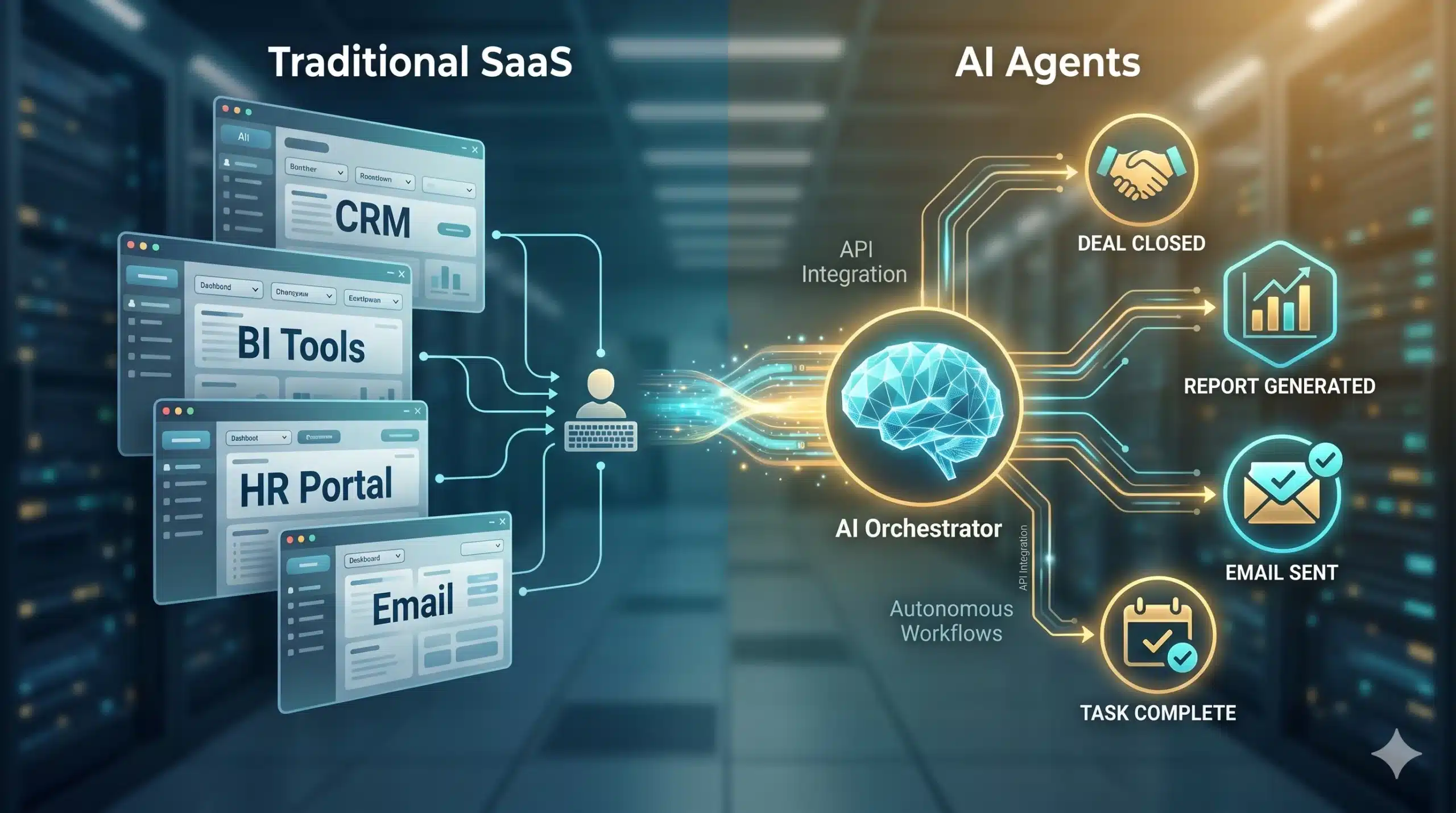
The End of SaaS? How AI Agents are Replacing Subscription Interfaces

April 27, 2026 | 12:36 am by Lowell Langosh
Physical AI: Bringing Large Language Models into the Real World

The “Software as a Service” (SaaS) model is being … Read more
Categories Technology

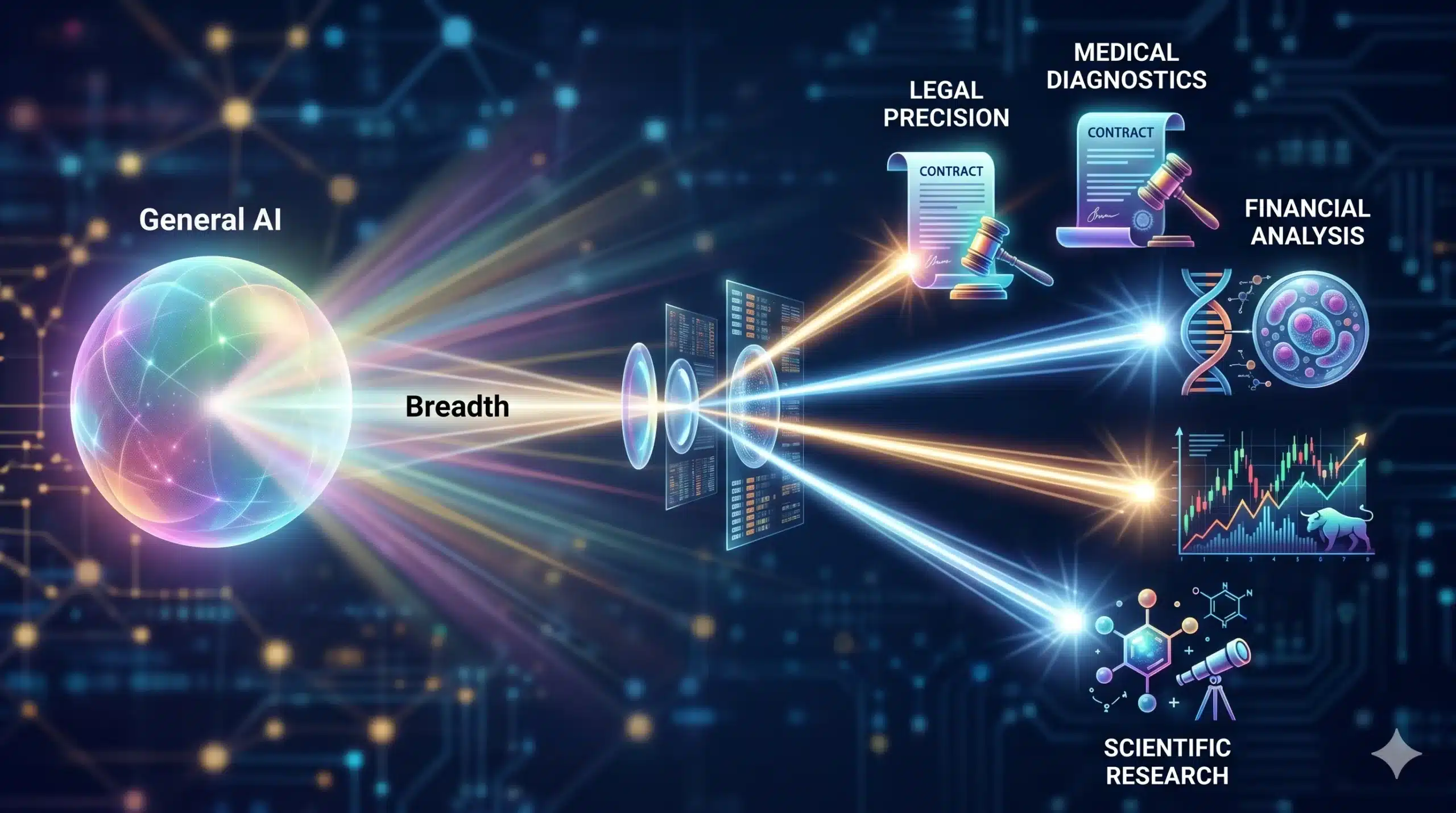
Why Domain-Specific Models (DSMs) are Outperforming General AI

April 27, 2026 | 12:33 am by Lowell Langosh
The "Software as a Service" (SaaS) model is being suffocated by its own success. We have reached a point of "app fatigue" where the average enterprise utilizes over 300 different SaaS applications, each with its own login, its own distinct UI, and its own monthly subscription fee. For the end user, this has created a fragmented digital experience where productivity is lost in the "toggle tax"—the mental friction of switching between tabs just to move data from point A to point B.We are witnessing the beginning of the "post-UI" era. The traditional model of human-to-interface interaction is being bypassed by AI Agents. These autonomous entities don't just sit behind a dashboard waiting for a click; they navigate the infrastructure of the web on your behalf. If an agent can execute a task across five different platforms without you ever seeing a single login screen, the value of the individual subscription interface begins to evaporate.The "Why": The Death of the DashboardThe economic shift driving this trend is the realization that businesses don't actually want "software"—they want outcomes. Historically, a subscription to a CRM like Salesforce or a marketing tool like HubSpot was a payment for access to a set of features. However, those features required a human operator to log in and do the work. This created a ceiling for ROI; the software was only as valuable as the time a human could spend inside it.Technologically, the advent of Large Action Models (LAMs) has fundamentally changed the math. We no longer need a human to act as the "glue" between different parts of a digital ecosystem. When an AI can understand the intent of a request and has the "fingers" (via APIs and browser-level control) to execute it, the individual SaaS interface becomes a vestigial organ. The "moat" that software companies built using proprietary UIs is being bridged by agents that treat the entire web as a single, unified operating system.Technical Breakdown: From Interface to ExecutionThe transition from SaaS to Agentic Services relies on a shift from "Graphic User Interfaces" (GUI) to "Large Language Model Actions."Semantic Layering: Agents use a semantic understanding of a task (e.g., "Find a flight and book it within budget") rather than following a rigid path of buttons.Headless Integration: Instead of rendering a webpage for a human, agents communicate directly with "headless" versions of software or via deep integration layers that bypass the visual frontend entirely.Orchestration Protocols: New protocols, such as the Model Context Protocol (MCP), allow different agents to "talk" to one another, sharing data across previously siloed platforms without manual data entry.Dynamic UI Generation: When a human does need to be involved, the agent generates a temporary, purpose-built interface—showing only the data needed for a specific decision—and then dissolves it.The SaaS Paradigm ShiftFeatureLegacy SaaS (2010–2024)Agentic Services (2026+)Primary InterfaceManual Dashboard (GUI)Natural Language / AutonomousUser InteractionTask-based (Click/Type)Intent-based (Goal Setting)Data FlowSiloed (API required)Fluid (Agent-to-Agent)Billing ModelPer User / Per MonthPer Outcome / Per ComputeReal-World Impact: The "Invisible" EnterpriseThe impact of this shift is most profound in high-volume, low-margin digital operations. Consider a Digital Entrepreneur managing a sports news network in Mozambique. Under the old SaaS model, they would need subscriptions for an auto-blogging tool, a translation service, an SEO optimizer, and a social media scheduler. They would spend hours every week logging into each to ensure they are synced.In the agentic era, they maintain a single "Agentic Orchestrator." The agent identifies trending sports topics in Portuguese, generates the content, optimizes it for the local infrastructure, and publishes it across the network. The entrepreneur never sees the "interface" of the underlying tools. The SaaS providers become "commodity utilities," providing the raw data or the publishing pipeline, while the agent captures the primary relationship with the user.For consumers, this looks like the death of the "App Store." Instead of 50 apps on a home screen, there is one intent-box. Whether you want to order food, book a Suzuki scooter service, or research red brick costs for a G+1 house in Odisha, the agent handles the multi-step integration across various services silently in the background.Challenges & Ethics: The "Black Box" EconomyThe move away from visible interfaces introduces significant scalability and trust "bottlenecks."The Transparency Gap: If you never see the software's UI, how do you know the agent is making the best choice? There is a risk that agents will prioritize services they are "partnered" with rather than the one that provides the best value to the user.Inference Costs: Moving away from static UIs toward dynamic, reasoning agents requires massive compute power. This could lead to a "Two-Tier Internet" where only those who can afford high-end agentic subscriptions have access to true efficiency.Security & Identity: How does an agent prove it has the authority to spend your money or access your private Gmail data without a human-mediated login? Solving "Agentic Identity" is the primary hurdle for the next three years.The 5-Year Outlook: The Rise of the Outcome EconomyBy 2030, the "SaaS" acronym may be replaced by "AaaS"—Agents as a Service. The software companies that survive will be those that stop building pretty dashboards and start building the most robust, agent-friendly APIs.

The “Swiss Army Knife” approach to artificial intelligence is … Read more
Categories Technology

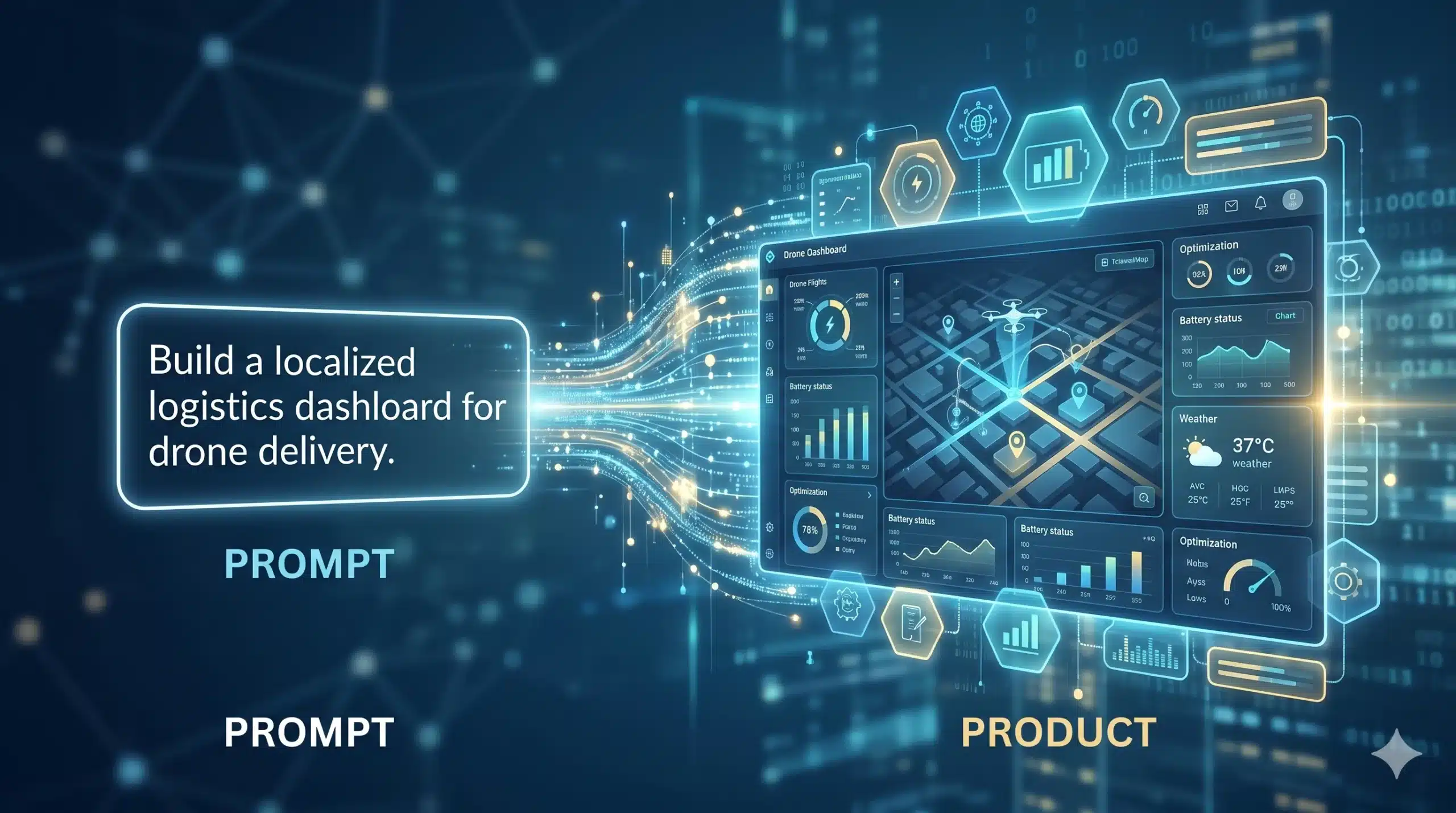
From Prompt to Product: The New Era of AI-Native Software Design

April 27, 2026 | 12:31 am by Lowell Langosh
The "Swiss Army Knife" approach to artificial intelligence is hitting a wall of diminishing returns. While massive, general-purpose Large Language Models (LLMs) like GPT-4 or Gemini have dazzled the public with their ability to write everything from bedtime stories to Python scripts, the enterprise reality is proving much grittier. For a doctor, a general model that knows "a little bit about everything" is a liability; for a legal firm, a model that might prioritize poetic flow over case law precision is a danger.We are witnessing the "Great Specialization." As organizations look for a clear path to ROI, the focus has shifted from the breadth of a model to its depth. This is the era of Domain-Specific Models (DSMs)—leaner, faster, and hyper-targeted AI trained on the specialized vernacular of specific industries. In the race for enterprise efficiency, the specialized scalpel is officially outperforming the general-purpose sledgehammer.The "Why": The Collapse of Generalist EfficiencyThe shift toward DSMs is driven by a simple economic reality: general-purpose models are becoming too expensive and too unpredictable for mission-critical tasks. When an LLM is trained on the entire public internet, it inherits the internet's noise. It struggles with specialized jargon, hallucinating answers where precise terminology is required. For businesses, "close enough" is an unacceptable metric when dealing with medical diagnostics, high-frequency trading, or structural engineering.Technologically, we have reached the point of "saturation" with model size. Adding another trillion parameters to a general model offers marginal improvements in logic but exponential increases in infrastructure costs and latency. DSMs solve this by focusing "intelligence" where it matters. By narrowing the scope, developers can achieve higher accuracy with significantly smaller models, leading to better scalability and reduced "inference tax."Technical Breakdown: How DSMs Achieve PrecisionDSMs don't just "know" more about a subject; they are architected to understand the unique data relationships of a specific field.Curated Data Sets: Unlike general models that scrape the web, DSMs are trained on high-quality, verified textbooks, proprietary research, legal filings, or technical manuals.Targeted Fine-Tuning: These models often use techniques like PEFT (Parameter-Efficient Fine-Tuning) or LoRA (Low-Rank Adaptation) to layer specialized knowledge onto a foundational model without bloating the ecosystem.Reduced Hallucination via RAG: DSMs are frequently paired with Retrieval-Augmented Generation (RAG) tied to private, domain-specific databases. This ensures the AI cites "ground truth" rather than predicting the next most likely word.Lower Latency: Because they are smaller, DSMs can run on "edge" devices or localized servers, ensuring that the integration into real-time workflows—like robotic surgery or live stock trading—is instantaneous.The Specialization SpectrumFeatureGeneral Purpose LLMsDomain-Specific Models (DSMs)Knowledge BaseEverything (Breadth)Deep Industry Knowledge (Depth)AccuracyHigh for general, Low for nicheElite for niche, Low for generalOperational CostHigh (Massive Compute)Lower (Optimized/Smaller)Primary RiskGeneric HallucinationsOver-specialization (Tunnel vision)Real-World Impact: From Law to the LaboratoryThe impact of DSM specialization is most visible in industries where the cost of error is high. In Legal Tech, a DSM trained on centuries of case law can identify precedents and subtle contract contradictions that a general model would overlook. It doesn't just "write a contract"; it ensures the contract is compliant with specific regional statutes.In Game Development, a developer focusing on "hybrid-casual" survival runners can use a DSM trained specifically on Unity physics and Synty asset logic. Instead of getting a generic "how-to" on C#, they receive code snippets that are pre-optimized for their specific mobile infrastructure, leading to a faster launch from concept to the Google Play Store.In Healthcare, DSMs like BioGPT are outperforming generalist models in analyzing complex biochemical interactions. By understanding the "language" of proteins and molecular structures, these models are cutting the drug discovery phase from years to months, providing a tangible ROI that justifies the initial training costs.Challenges & Ethics: The Privacy and Purity BottleneckSpecialization brings its own set of "bottlenecks," primarily concerning data governance.Data Scarcity: To build a truly elite DSM, you need high-quality data. In many fields, this data is proprietary or protected by strict privacy laws (like HIPAA or GDPR), making it difficult to source training sets.The "Eco-System" Silo: If every department in a company uses a different DSM, the risk of data silos increases. Ensuring seamless integration between a "Marketing DSM" and a "Legal DSM" requires robust cross-functional infrastructure.Algorithmic Bias: If a DSM is trained on a narrow set of historical data, it may reinforce industry biases. For instance, a "Hiring DSM" trained on a tech firm's past 10 years of resumes might inadvertently favor certain demographics if the training data wasn't properly sanitized.The 5-Year Outlook: The Rise of Personal Micro-ModelsOver the next three to five years, the "One Model to Rule Them All" philosophy will be replaced by a "Federated Model" approach. We will see the emergence of Micro-DSMs—AI that is so specialized it lives on a single device and understands only the specific tasks of that user.

The traditional software development lifecycle is dying a slow, … Read more
Categories Technology

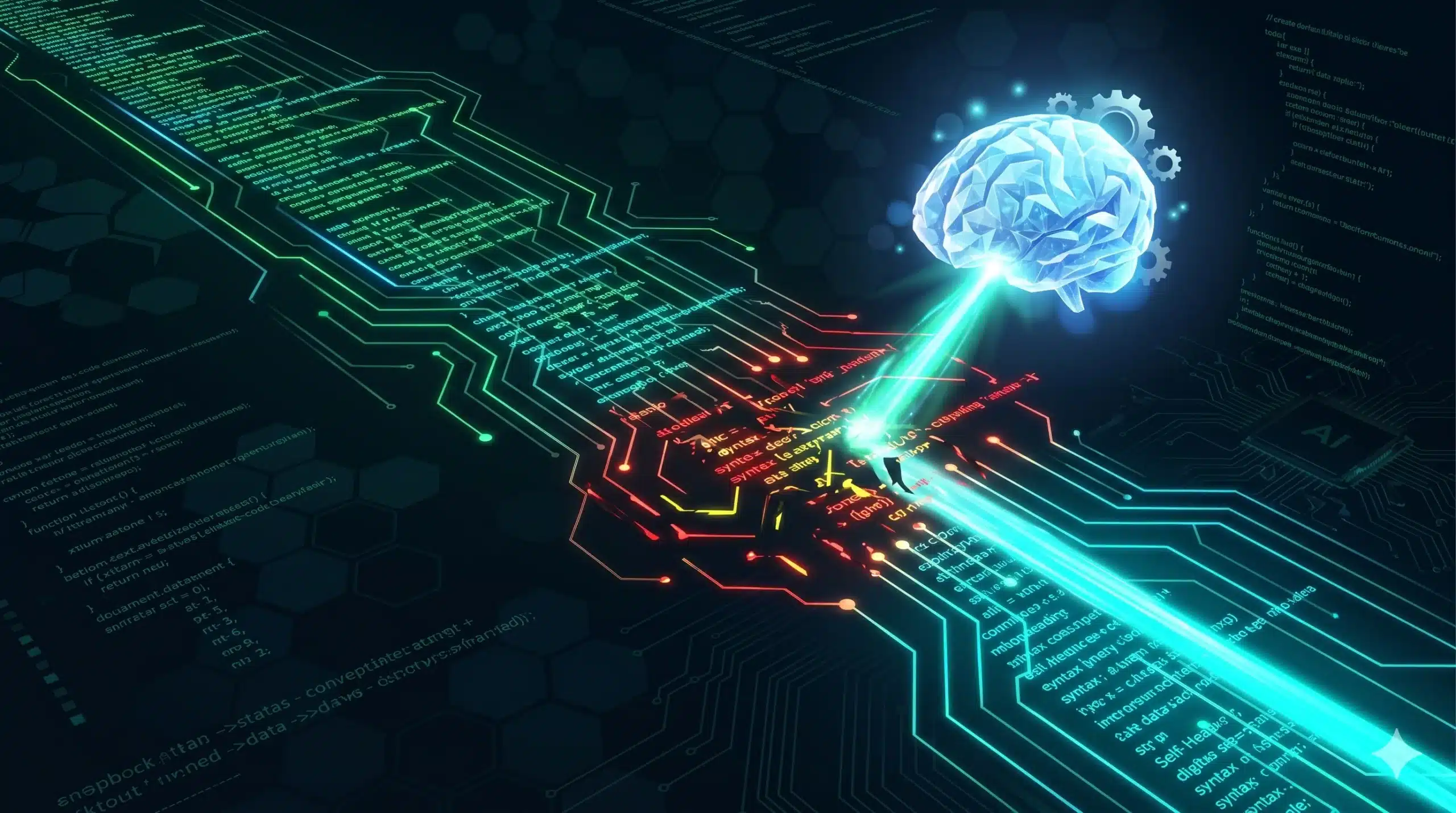
Self-Healing Code: How AI is Automating the Debugging Lifecycle

April 27, 2026 | 12:29 am by Lowell Langosh
The traditional software development lifecycle is dying a slow, expensive death. For decades, the process has been a grueling marathon of manual requirements gathering, static wireframing, and thousands of hours of hand-cranked code. It is a world where a simple feature request can take six months to reach production. In an era where market demands shift in days, this "industrial age" approach to digital creation has become the ultimate growth inhibitor.We are entering the age of AI-Native Software Design. This isn't just about developers using AI assistants to write snippets of JavaScript; it is a fundamental re-imagining of how software is conceived and birthed. We are moving toward a reality where the "prompt" is the specification, and the "product" is generated, deployed, and optimized in a near-instantaneous loop.The Shift: Why "Code-First" is Becoming "Intent-First"The economic shift driving this trend is the collapse of the barrier between "business logic" and "execution." Historically, a founder with a brilliant idea needed a translator—a developer—to turn that idea into a functional product. This translation layer is where ROI often goes to die, lost in miscommunication and technical debt.Technologically, the rise of Large Action Models (LAMs) and sophisticated multi-agent systems has allowed us to bypass the manual drafting phase. Companies are no longer building software to last a decade; they are building "disposable" or "hyper-adaptive" software designed to solve a specific problem right now. The shift is from infrastructure management to intent management. If the cost of generating a bespoke application drops to near zero, the very definition of a "software company" changes overnight.Technical Breakdown: The AI-Native StackAI-native design replaces the linear assembly line with a generative ecosystem. It relies on a stack that treats code as a fluid, rather than a solid.Neural Blueprints: Instead of static Figma files, designers use high-fidelity prompts to generate "living mockups" that possess underlying logic from day one.Agentic Orchestration: A "Manager Agent" decomposes a high-level prompt into database schemas, API routes, and frontend components, assigning these tasks to specialized "Worker Agents."Just-in-Time (JIT) Compilation: Software is increasingly generated at the moment of need. If a user requires a specific data visualization that doesn't exist, the AI-native system writes and renders the code for that module on the fly.Automated Integration: The system handles its own integration logic, automatically connecting to existing enterprise tools and ensuring that the new "product" plays nice with the legacy infrastructure.The Generative EvolutionFeatureLegacy Software DesignAI-Native Design (2026+)Development CycleMonths of sprintsMinutes of generationPrimary InputTechnical SpecificationsNatural Language IntentScalabilityLimited by headcountLimited by compute creditsMaintenanceManual patchesSelf-evolving updatesReal-World Impact: Hyper-Personalized EnterpriseThe most profound impact of AI-native design is the death of "one-size-fits-all" SaaS. Consider a Digital Entrepreneur managing a portfolio of niche websites. Instead of trying to bend a generic Project Management tool to their will, they prompt a custom dashboard into existence: "Build me a tracker that syncs my AdX revenue, MozStriker logs, and Suzuki inventory, with a 9:16 vertical mobile view for my field team." The software is generated specifically for their workflow, offering a level of efficiency no off-the-shelf product could match.In the Healthcare sector, hospital administrators can generate internal triage applications that adapt in real-time to current patient loads and staffing shortages. These aren't "features" added to a platform; they are entire, temporary micro-products generated to solve a crisis in real-time. This level of scalability allows organizations to be as agile as the startups that used to threaten them.Challenges & Ethics: The Quality and Cost ParadoxWhile the speed is intoxicating, AI-native design introduces a new set of "integration" headaches and ethical minefields.The "Black Box" Problem: If an AI generates 10,000 lines of code in seconds, who is auditing it for security backdoors or logical fallacies? The "Reviewer" becomes the new bottleneck.Inference Economics: The compute power required to constantly generate and regenerate software is immense. For many, the ROI could be swallowed by the skyrocketing cost of high-end GPU clusters.Ownership & Copyright: When a product is 99% AI-generated, the legal definitions of intellectual property become blurred. Does the "prompter" own the code, or does the model provider have a claim?The 5-Year Outlook: The Democratization of CreationBy 2030, the "Software Developer" title will likely split into two: the "Model Scientist" who builds the engines of generation, and the "Product Architect" who directs them. The act of "coding" will be viewed much like the act of "typesetting" is today—a niche, artisanal skill that is largely automated for the masses.

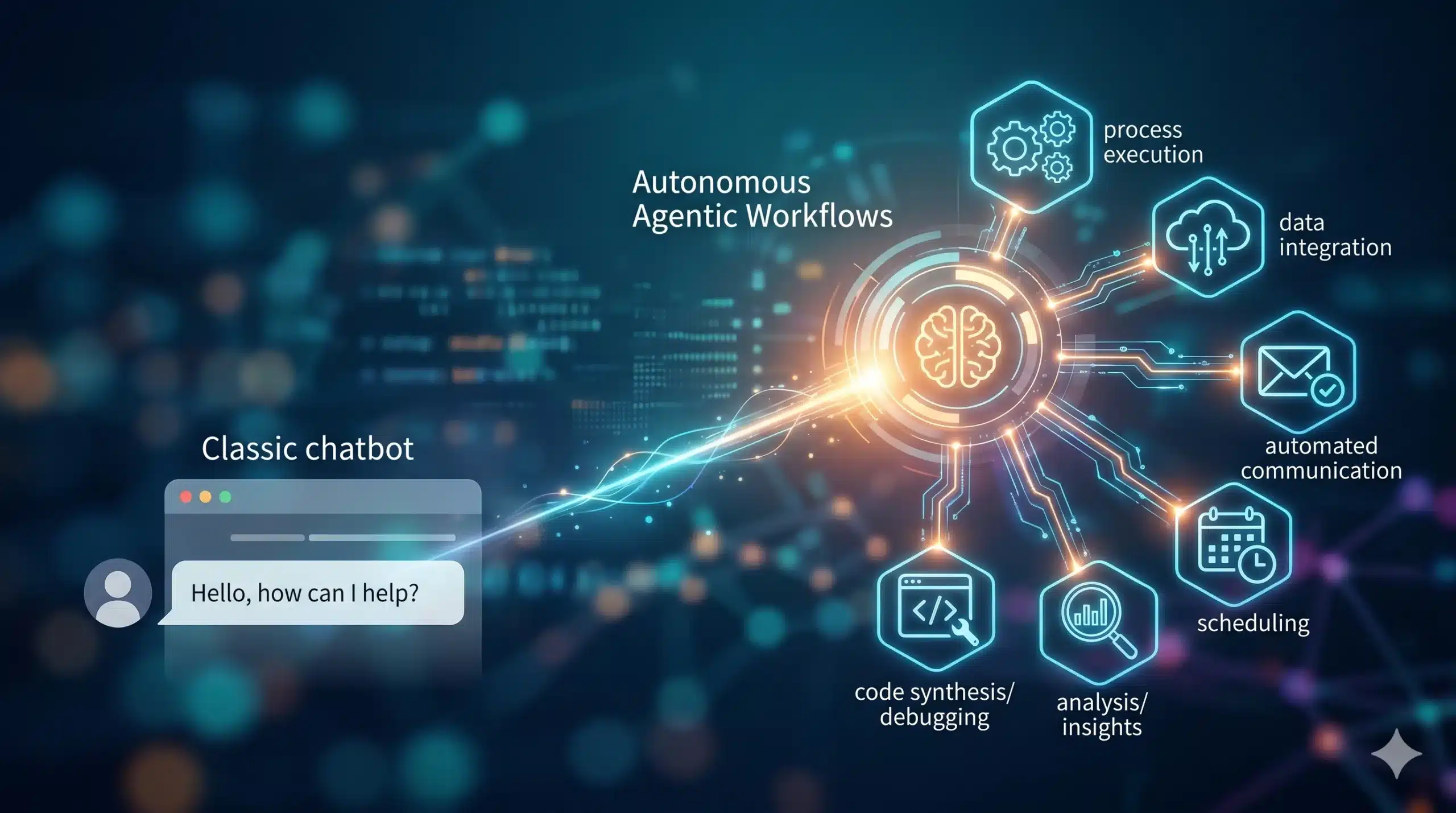
The most expensive hour in modern business isn’t spent … Read more
Categories Technology

Beyond the Chatbot: The Rise of Autonomous Agentic Workflows

April 27, 2026 | 12:26 am by Lowell Langosh
generate 16:9 ratio featured image

The honeymoon phase with the “chat box” is officially … Read more

Categories Technology

Snow and Weather Alerts Trigger Widespread School Closures in Connecticut Today

December 23, 2025 | 4:40 am by Lowell Langosh
Snow and Weather Alerts Trigger Widespread School Closures in Connecticut Today

School Closures in Connecticut: A pre-Christmas winter storm brought … Read more

Categories News

Tesla Robotaxi Teleoperation Explained: The Hidden Humans Keeping Self-Driving Cars Safe

December 23, 2025 | 4:25 am by Lowell Langosh
Tesla Robotaxi Teleoperation Explained: The Hidden Humans Keeping Self-Driving Cars Safe

Tesla Robotaxi Teleoperation: For the better part of a … Read more

Categories Automobile

Samsung Galaxy Z Tri-Fold Phone Unveiled: A Bold Step into Multi-Foldable Design

December 19, 2025 | 7:13 am by Lowell Langosh
Samsung Galaxy Z Tri-Fold Phone Unveiled: A Bold Step into Multi-Foldable Design

Samsung Galaxy Z Tri-Fold Phone: Samsung has officially launched … Read more

Categories Technology

iPhone Air 2: Expected Launch Date, Camera Upgrades, Price Details and Design Changes

December 18, 2025 | 4:34 am by Lowell Langosh
iPhone Air 2: Expected Launch Date, Camera Upgrades, Price Details and Design Changes

iPhone Air 2: Apple’s ultra-thin iPhone Air arrived in … Read more

Categories Technology
Older posts
Newer posts
← Previous Page1 Page2 Page3 … Page8 Next →
  • Home
  • About Us
  • Contact Us
    • Correction Policy
  • Disclaimer
  • Editorial Policy
  • Fact-Checking Policy
  • Feedback Policy
  • Privacy Policy
© 2025 Signature School Media
  • News
  • Sports
  • Entertainment
  • Automobile
  • Technology
  • Business